

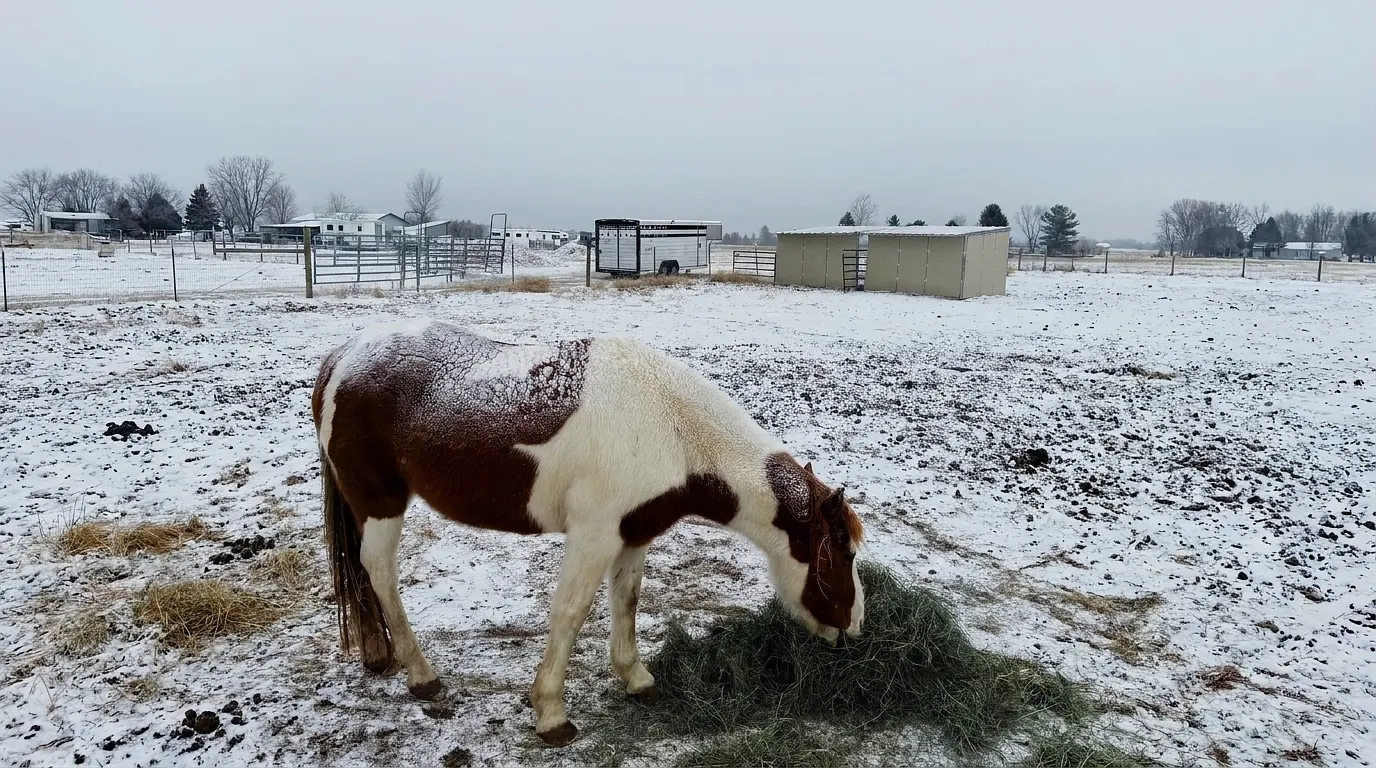
A gelding named Duke went into winter looking solid, maybe even a little heavy. His owner put a turnout blanket on him in November, checked on him daily through the fence line, and did not think much more about it until the blanket came off in March. Underneath, Duke had dropped enough weight that his ribs were visible and his topline had flattened out. Nothing about his daily routine had looked wrong from the outside. The blanket had simply hidden the one thing that would have caught the problem months earlier.
This is not a rare story among horse owners, and it points to something more useful than a generic checklist of horse care basics. Most serious horse care mistakes are not failures of effort. They are failures of visibility, situations where a horse looks fine on the surface while something underneath quietly goes wrong.
Why “Checking On Him” Was Not the Same as Actually Checking
The Blanket Problem
Blanketing a horse for winter is common practice, especially for older horses or those with less natural coat, but a blanket that never comes off also means no one is running a hand along the ribs, the spine, or the hip bones to feel for condition changes underneath. A horse can lose a significant amount of weight over a winter while still looking normal from a distance, simply because the blanket is doing exactly what it is supposed to do, which is cover the body.
Duke’s owner had been visually checking on him daily, which felt like enough. What was missing was the physical check, hands-on, blanket off, at least once every week or two, to actually feel body condition rather than assume it from a distance.
What the Vet Found Once the Blanket Came Off
When Duke’s owner finally called the vet in March, the exam turned up two separate issues layered on top of each other. His teeth had developed sharp points from uneven wear, which was making him quid his hay rather than actually chew and swallow it properly, and a fecal egg count came back higher than expected, suggesting his deworming schedule had not kept pace with his actual parasite load. Neither of these issues would have caused dramatic symptoms early on. Both are the kind of problem that show up as slow, quiet weight loss long before anything looks like an emergency.
The Three Areas Horse Owners Underestimate Most
Dental Care Is Not Optional Just Because a Horse Eats Fine
Horses have teeth that erupt continuously throughout their life, and uneven wear creates sharp points that make chewing painful without necessarily stopping a horse from eating altogether. A horse can still eat and still lose condition, because sharp points and painful chewing often lead to quidding, where hay gets partially chewed and dropped rather than properly digested. This is why a dental exam once or twice a year matters even for a horse that shows no obvious signs of mouth pain.
Deworming Needs Actual Data, Not a Habit
Many owners deworm on a fixed schedule out of habit rather than checking whether it is still working. Parasite resistance to common dewormers has become widespread enough that a fecal egg count test is now the more reliable way to know what is actually happening inside a horse’s gut, rather than assuming a product is working just because it was used last season. Duke’s case showed a parasite load that had crept up despite a dewormer being used on schedule, which is exactly the gap a fecal test is designed to catch.
Forage Should Be the Default, Not the Afterthought
A common mistake is treating grain as the main event and hay as filler, when it should be the other way around. Most horses need somewhere between 2 and 2.5 percent of their body weight in forage daily, with grain used only to fill specific caloric or nutritional gaps rather than as the primary food source. An empty stomach for too long raises the risk of ulcers, and horses are built to graze steadily throughout the day rather than eat two or three large meals.
The Habit That Actually Prevents This
Hands-On Checks, Not Just Visual Ones
The single change that would have caught Duke’s weight loss earlier was a simple habit: pulling the blanket back regularly to run a hand along the ribs and spine, rather than relying on a visual check from across the paddock. This takes a few extra minutes and catches exactly the kind of slow change that a daily glance tends to miss.
A Standing Relationship With a Vet, Not Just an Emergency Contact
Owners who see the same vet for annual exams tend to catch problems earlier, simply because that vet already knows what the horse’s normal baseline looks like. A vet meeting a horse for the first time during an emergency has no baseline to compare against, which makes early, quiet problems much harder to catch quickly.
Hoof Care on a Fixed Schedule, Not a Reactive One
Hooves need attention every four to six weeks regardless of how much a horse is being ridden, because trims and shoeing on a fixed schedule prevent the kind of imbalance that eventually turns into lameness. Waiting until a horse looks uncomfortable to call the farrier usually means the imbalance has already been building for a while.
What Changed for Duke
His owner now treats blanket season as a reason for more hands-on checks, not fewer, pulling the blanket back every week to feel his condition directly rather than relying on how he looks from the fence line. His deworming schedule is now built around fecal egg counts rather than a fixed calendar, and his dental exams happen twice a year instead of whenever something seems off. By the following winter care, the same blanket came off in March covering a horse that had held his weight the entire season, which was the whole point of the change in the first place.