

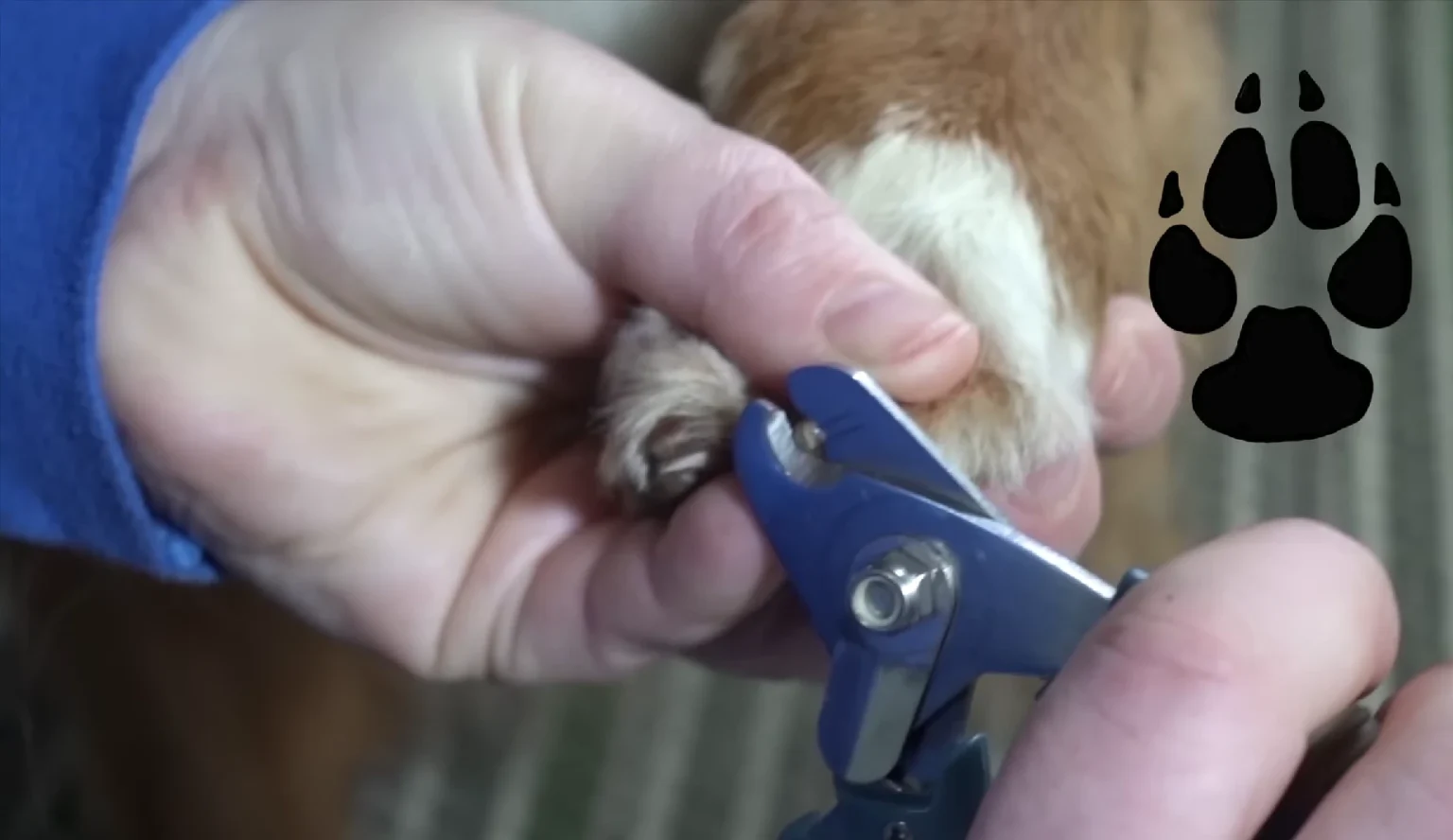
My neighbor’s terrier mix, Biscuit, used to bolt under the bed the second he heard the click of a nail clipper case opening. It took her almost three months of short, boring, treat-heavy sessions before he’d sit still for a full trim. That’s the part nobody warns new pet parents about: nail trimming isn’t a five-minute chore you knock out once and forget. It’s a skill you build, for both you and your pet.
Overgrown nails aren’t just a cosmetic issue or a scratched-up floor problem. They change how an animal stands and moves, and over time that can turn into a real orthopedic issue.
Why Overgrown Nails Are More Than a Nuisance
When a dog’s nails grow past the point where they naturally wear down, the toes start splaying or curling to compensate. Walking becomes uncomfortable, and the strain can eventually work its way up into the joints. Cats face a different but related problem. Overgrown claws can snag on carpet and furniture, and cats who have been declawed sometimes develop litterbox avoidance or other behavioral issues tied to sore, mishandled paws.
The nail itself isn’t solid all the way through. Running down the center is a blood vessel called the quick. In light-colored nails, the quick is usually visible as a pinkish line inside the nail. In dark nails, it’s hidden, which is exactly why so many pet parents are nervous about trimming.
Getting Your Tools and Your Pet Ready
Before you touch a single claw, it helps to get familiar with the anatomy and the equipment.
Choosing the right trimmer:
- Guillotine-style clippers work well for most dogs and are generally the easiest style to learn on
- Scissor-style trimmers are better suited to cats, small dogs, or a dog’s dew claw
- A rotary tool or nail file can round off sharp edges or gradually shorten nails without a single decisive cut
Once you have the tools, spend time getting your pet comfortable with the process itself, separate from the actual trimming. Hold their paw. Touch each nail. Offer a treat. Do this for a few days with zero clipping involved. Gradually add a bit more pressure to your grip, closer to what you’ll use when trimming, and keep pairing it with praise or food. Let them see and sniff the clippers before you ever bring the tool near a nail.
This groundwork matters more than people expect. A pet who associates the clippers with anxiety will fight you every single time. A pet who’s been slowly desensitized will often tolerate, or even relax into, a trim.
How to Actually Clip the Nail
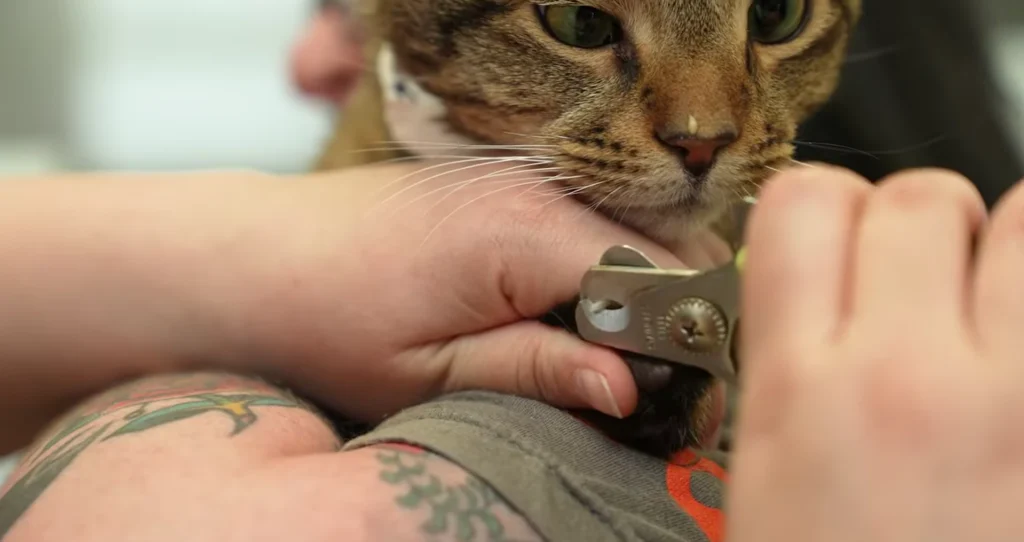
Pick a moment when your pet is naturally calmer, right after a walk or during that drowsy post-nap stretch works well. Position matters too:
- For a dog that tolerates handling, you can drape your upper body gently over them while they sit or lie down, keeping one arm resting over the neck or shoulders so they can’t easily lift their head or stand
- For a wigglier dog, laying them on their side often gives you steadier control
- Grip each toe firmly but gently between your thumb and forefinger before positioning the clipper
Place the tip of the nail inside the trimmer’s ring, keeping the blade perpendicular to the nail and closer to your hand than to the paw. Cut from underneath at roughly a 45-degree angle, working in the same direction the nail naturally grows.
For light-colored nails, you can usually see the quick as a faint pink line and stop just before it. For dark nails, the safer approach is to take several small, shallow cuts rather than one confident slice. Watch the cut surface as you go. Once you see a grayish or pinkish oval start to appear in the center, stop. That’s the quick coming into view, and cutting further will cause bleeding and pain.
Trimming the Dew Claw
The dew claw sits higher on the inner side of the paw, attached by loose skin rather than sitting flush against the ground like the other nails. Because it never touches the floor, it doesn’t wear down naturally the way walking nails do, which means it needs regular attention on its own schedule. Bend it gently away from the leg and trim it with a scissor-style tool. Left unchecked, dew claws can curl inward and grow directly into the toe pad, which is genuinely painful for the animal.
If You Nick the Quick
It happens, even to experienced pet parents. Don’t panic and don’t rush.
- Keep styptic powder or plain cornstarch on hand before you start trimming, not after
- Press the bleeding nail gently into the powder for several seconds
- Without any powder on hand, the bleeding typically stops on its own within about five minutes, though it will feel much longer
A nicked quick doesn’t mean you did something wrong. It means you’re learning your particular pet’s nails, and every animal’s are a little different.
When Your Pet Refuses to Cooperate
Some pets never fully warm up to nail trims, and that’s a normal outcome, not a failure on your part.
A few ways to work around a resistant pet:
- Increase walks on concrete or other hard, abrasive surfaces so nails wear down naturally between trims
- Only clip one or two nails per session and stop there, even if the rest still need work
- Bring in a second person, one to gently distract and reward while the other trims
- Recognize when a session isn’t working and simply walk away rather than forcing it
If your pet is actively struggling or seems genuinely fearful, stopping and trying again another day is always the better call than pushing through. A single bad experience can undo weeks of careful desensitization work.
Turning to a Professional
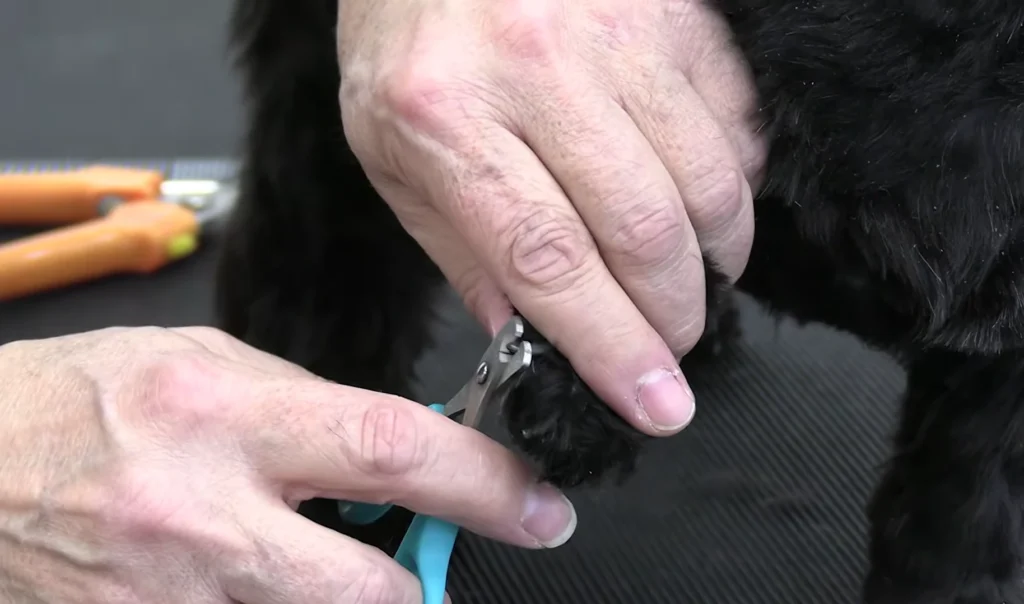
Some animals, because of their size, temperament, or nail color, are simply harder to manage at home, and there’s no shame in getting help. A veterinarian, veterinary technician, or professional groomer can trim nails safely and can also walk you through the technique hands-on, which is often the fastest way to build confidence. Many vet clinics will do a quick nail trim as a standalone visit, without requiring a full exam.
Nail trimming isn’t something most pets enjoy, but with the right pace, the right tools, and a little patience on your end, it becomes a manageable part of routine care rather than a monthly battle.