

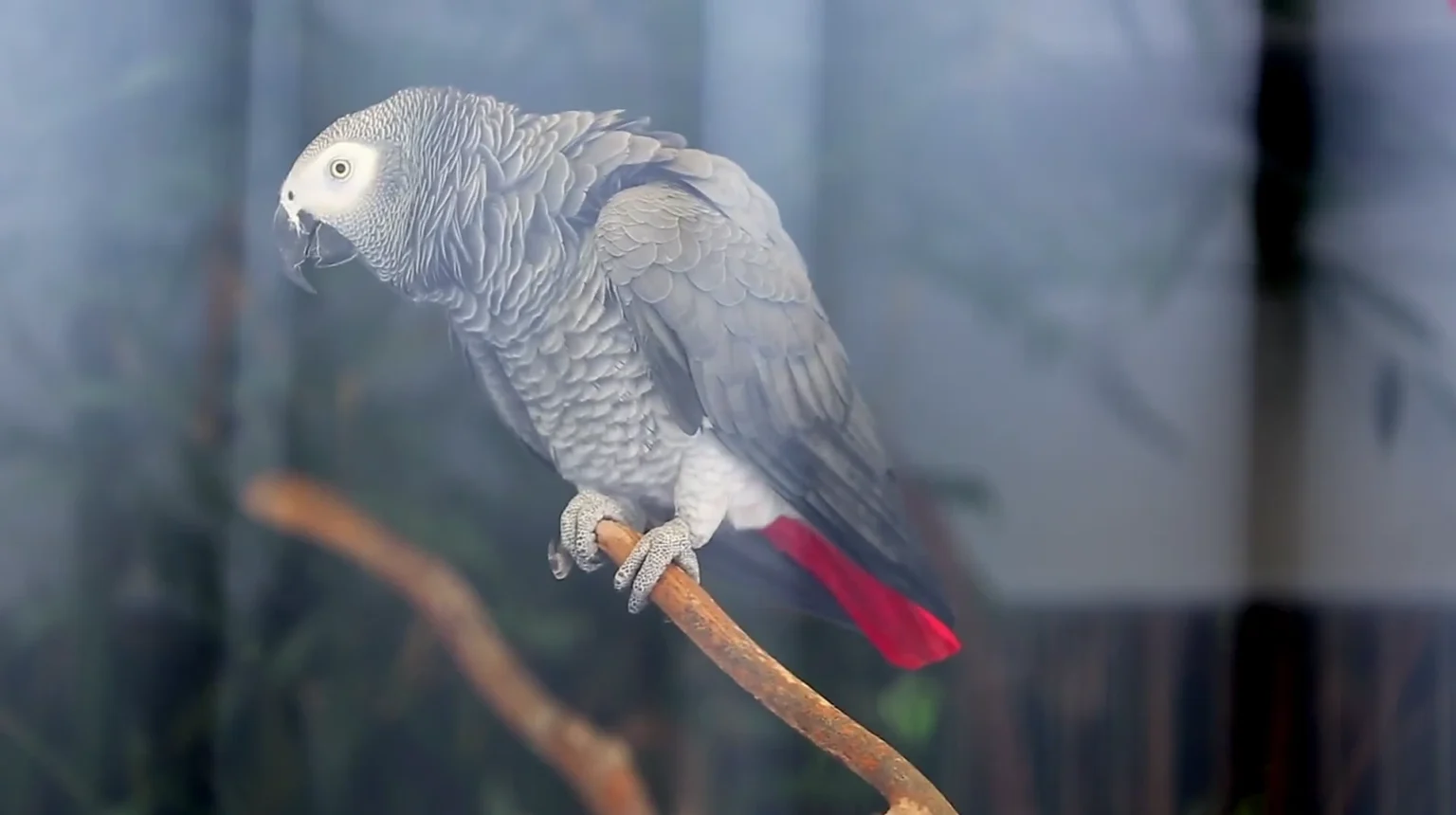
The title of this piece contains a trap, and it is worth naming before anything else. “A boredom problem” is where this story lands, but it is emphatically not where the story should start. The single most dangerous move an owner can make when a conure begins plucking is to decide it is boredom and act on that assumption. The near-miss in this account is not that the boredom went unnoticed. It is how close we came to treating boredom that was never confirmed.
Feather-destructive behavior is common, distressing, and genuinely hard to solve. It affects an estimated 10 to 15 percent of pets parrots overall, and up to 20 to 25 percent of African Greys and cockatoos, and it rarely has a single cause. Conures sit among the more susceptible species. Getting the order of investigation right is the whole game.
Why Boredom Is the Last Box to Tick, Not the First
Here is the rule that every avian vet holds and most owners do not. Boredom is a diagnosis of exclusion. You do not arrive at it by recognizing it. You arrive at it by ruling everything else out first. The Merck Veterinary Manual is explicit about the sequence. Behavioral causes of feather plucking, such as boredom or sexual frustration, are usually suspected only when medical causes are not found.
The list of medical causes that mimic a behavioral problem is long and does not announce itself. Medical triggers include bacterial, viral or parasitic infections, allergies, hypothyroidism and skin irritation, and because causes overlap, a board-certified avian veterinarian should evaluate the bird before anyone assumes the problem is purely behavioral. The broader differential includes:
- Skin or internal organ disease
- Nutritional imbalance – e.g. low calcium or vitamin A deficiency
- Infectious agents – including PBFD virus and Chlamydia
- Allergic skin disease
- Pain – from an unhealed injury or arthritis
- Hormonal cycling and low humidity
- Boredom, social isolation, and anxiety – often in combination with the above
A bird plucking from a skin infection or a vitamin A deficiency looks, to an owner, exactly like a bird plucking from boredom. The behavior is identical. The cause is not, and only one of those is fixed by a new toy.
What the Vet Actually Does Before Saying “Boredom”
The workup is not a formality. It is a structured elimination, and it is the part that gets skipped when an owner self-diagnoses at home.
A proper avian assessment covers several fronts. The vet conducts a physical examination checking for skin lesions, parasites, and signs of infection; blood tests to identify nutritional deficiencies, organ disease, or infection; skin and feather tests under the microscope for parasites, bacteria, or fungi; a dietary assessment; and a behavioural history covering environmental and psychological stressors. In some cases it goes further, with whole-body X-rays, skin biopsy, and pathogen detection through cultures or PCR.
Only at the end does the behavioural label become available. If a physical cause cannot be determined and the patient’s history supports it, a diagnosis of behavioural feather-damaging can then be made, and at that stage a specialist veterinary behaviourist should be considered.
This is the step we almost skipped. It is the step almost everyone almost skips.
The Timing Clue That Points Toward Boredom Specifically
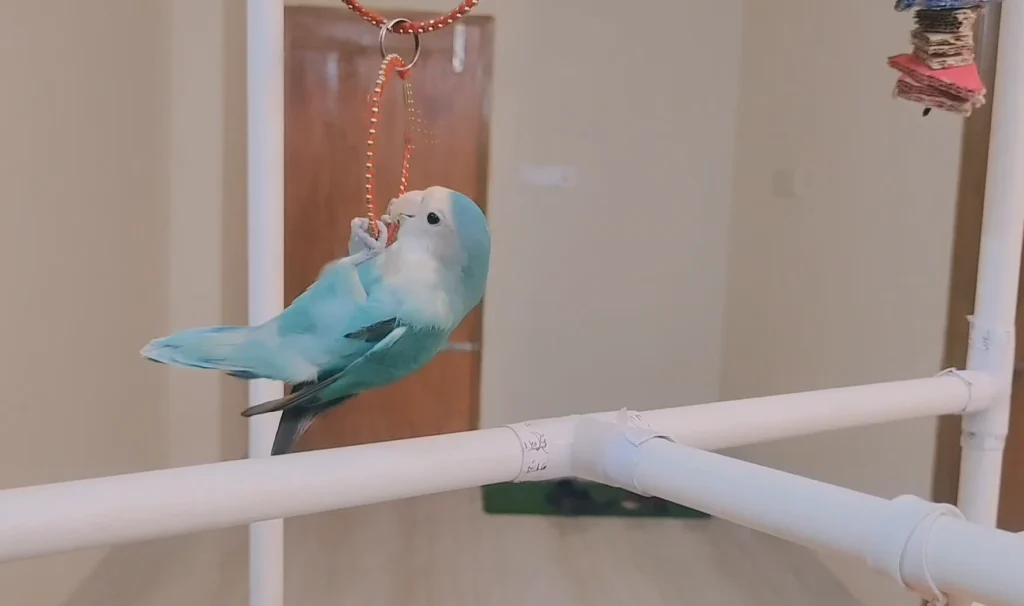
Once medical causes are excluded, the behavioural picture is not one undifferentiated blob. When the plucking happens tells the vet which behavioural cause is most likely, and this is where a boredom pattern separates itself from the alternatives.
The distinction is clean. When feather-damaging occurs while the caretaker is not present, separation anxiety and boredom should be considered; when it occurs while the caretaker is present but not paying attention, attention-seeking is more likely; and when the bird interrupts other behaviour to damage feathers, obsessive-compulsive disorder or true itching should be considered.
| When Plucking Happens | Likely Cause |
| While the caretaker is not present | Separation anxiety or boredom |
| While the caretaker is present but not paying attention | Attention-seeking |
| Interrupting other behaviour to pluck | Obsessive-compulsive disorder or true itching |
A bird that plucks when left alone, and settles when engaged, is showing the signature of a boredom or isolation problem rather than a medical or compulsive one. That pattern, sitting on top of a clean bill of health, is what finally makes “boredom” a responsible conclusion rather than a lazy guess.
Why Boredom Does This to a Conure in the First Place
The reason boredom expresses itself as feather destruction is not mysterious, and understanding it changes how you fix it.
Wild parrots spend an enormous share of their day working for food. Wild parrots such as the Puerto Rican Amazon forage for four to six hours daily, while captive Amazons monitored on camera ingested food for only 30 to 72 minutes a day and were inactive for a significant amount of time. The instinct to forage does not disappear in captivity just because a full bowl is provided. Captive parrots remain highly motivated to perform food-procurement behaviours even when their nutritional needs are already met, so the act of foraging is a behavioural need in itself, and the absence of foraging opportunity can result in frustration and the redirection of foraging-like activity toward the feathers.
That is the mechanism. The beak that would spend hours prising open seed pods in the wild has nothing to do, so it turns on the nearest available material, which is the bird’s own plumage. Feather-picking, on this model, is foraging with no outlet.
The research supports treating it that way. A crossover study of feather-picking African Greys, based on the redirected-foraging hypothesis, tested whether foraging enrichment devices alone would reduce the behavior, reasoning that since feathers regrow in about three weeks, improvement within a month should be visible. The controlled work on younger birds is more direct still: a study by Meehan, Millam and Mench found that young Amazon parrots given foraging opportunities and a more physically complex environment showed reduced psychogenic feather picking compared with parrots in standard setups.
What Actually Helps, and What to Expect
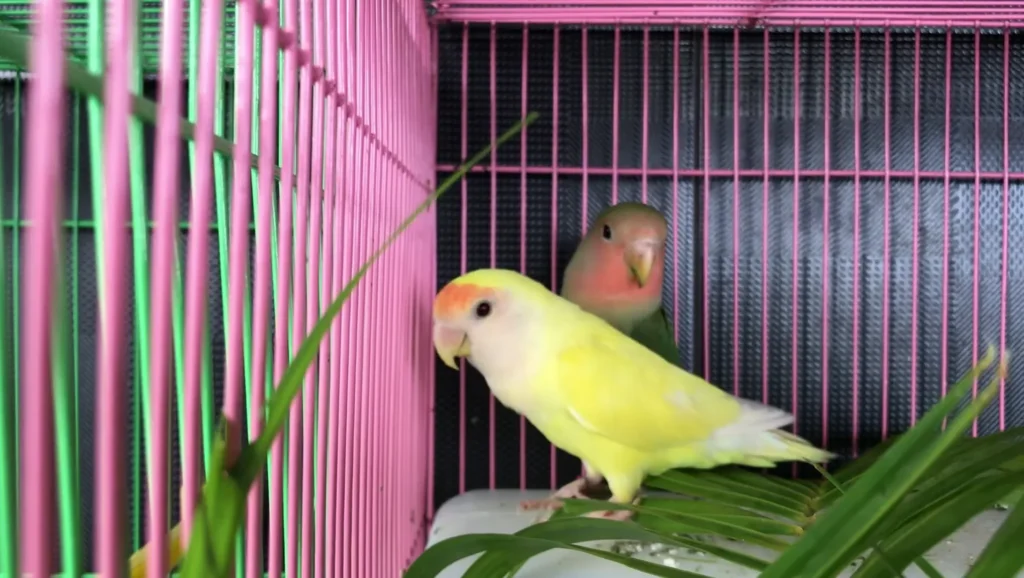
If the vet has cleared the medical causes and the pattern points to boredom, the intervention is enrichment, but enrichment of a specific kind and with realistic expectations.
- Make the bird work for food. Daily new foraging puzzles and varied toys reduce boredom-driven picking. The goal is to replace an empty bowl with food that has to be found, opened, shredded, and manipulated.
- Increase the physical complexity of the cage, not just the number of objects in it. Alternate perching sites and moveable, climbing, and swinging objects were part of what reduced picking in the research, alongside the foraging devices themselves.
- Vary it constantly. A foraging toy the bird has solved is no longer enrichment. Rotation is the point.
- Protect sleep and address hormones. Aiming for 10 to 12 hours of dark, uninterrupted sleep nightly helps stop the hormonal cycling that layers onto boredom-driven picking.
- Fix humidity and bathing. Regular misting baths three to five times a week and humidity above 40 percent support feather and skin condition.
- Give the bird your time. Conures are intensely social, and for some birds isolation is the driver that no toy replaces.
Two honest cautions belong here. The first is that enrichment is not a guaranteed cure. Foraging enrichments for parrots have so far not been able to fully approximate natural foraging time budgets nor completely eliminate feather-damaging behaviour. The second is that the habit can outlast its own cause: stress, boredom, and other psychological factors might trigger plucking, and the habit can continue even after the original inciting stress is gone. Starting early matters, because an established habit is harder to break than a new one.
The Practical Position
The story in the title is real in shape: a plucking conure, a boredom problem underneath, and enrichment as the answer. But the “almost missed” is not what it sounds like. We did not almost miss the boredom. We almost missed everything that comes before it.
If your conure starts plucking, the first call is to an avian vet, not to a pet shop. Quick behavioural fixes alone rarely work, because the condition so often has a medical or mixed cause, and a proper workup with bloodwork, skin and feather samples, and an environmental review is the right starting point.
Get the pet birds checked. Rule out the infections, the deficiencies, the pain, the hormones. Then, if the report comes back clean and the bird plucks when it is bored and stops when it is busy, you have earned the right to call it a boredom problem, and enrichment becomes the fix it genuinely can be.
The near-miss to avoid is not under-reacting to boredom. It is deciding on boredom before you have any right to.