

We set up our first aquarium on a Saturday morning, filled it with tap water, added a few decorations, and drove straight to the pet store to pick out six neon tetras that same afternoon. By Wednesday, three of them were gasping at the surface. By Friday, all six were dead. Nobody at the store had mentioned the one thing that would have changed everything, and it had nothing to do with the fish themselves. It had to do with the water they were being placed into.
That failure is common enough to have its own name in the aquarium hobby, and understanding why it happened is the actual foundation of taking care of a fish properly. Fish do not die from bad luck or fragile genetics nearly as often as they die from water that looks clean but is chemically dangerous, and almost every serious mistake in this hobby traces back to that one misunderstanding.
What Actually Killed Our First Tank
New Tank Syndrome Is Not a Myth, It Is Basic Chemistry
A brand-new aquarium is sterile. There are no beneficial bacteria living in the gravel or filter yet, which means there is nothing to process the ammonia that fish produce simply by eating and breathing. In an established tank, that ammonia gets converted into nitrite and then into far less harmful nitrate by bacteria that have had time to grow. In a new tank, that conversion process does not exist yet, so ammonia builds directly in the water and becomes toxic within days, which is exactly what happened to our tetras.
The Cycle We Skipped Entirely
The nitrogen cycle takes roughly four to six weeks to fully establish under normal conditions, and skipping it is consistently identified as the single most common and most damaging mistake beginners make. Setting up a tank properly means running it fish-free first, feeding the emerging bacteria colony with a small amount of fish food or pure ammonia, and testing the water regularly until ammonia and nitrite both read zero while nitrate begins to appear. Only at that point is a tank actually ready for fish.
The Nitrogen Cycle, Laid Out Simply
| Stage | What Happens | What It Means for the Tank | Approximate Timing |
|---|---|---|---|
| Ammonia buildup | Fish waste and leftover food break down into ammonia | Highly toxic to fish, must reach zero before adding livestock | Week 1 to 2 |
| Nitrite spike | Bacteria begin converting ammonia into nitrite | Still toxic, a rising then falling nitrite level signals real progress | Week 2 to 4 |
| Nitrate presence | A second bacteria colony converts nitrite into nitrate | Far less harmful, its appearance signals the cycle is nearly complete | Week 4 to 6 |
| Stable cycle | Ammonia and nitrite consistently read zero | Tank is ready for fish, managed going forward with water changes | Week 6 onward |
What We Did Differently the Second Time
Fishless Cycling, Start to Finish
We set the tank up again without a single fish in it, added a small daily dose of pure ammonia to simulate waste, and tested the water every few days with a liquid test kit rather than guessing. Watching ammonia rise, then fall as nitrite rose, then watching nitrite fall as nitrate appeared, took just over five weeks. Only once ammonia and nitrite both read zero for several consecutive days did we add fish, and none of them showed the gasping or lethargy that had ended the first attempt.
Choosing Fish That Actually Match Beginner Conditions
Certain species tolerate the inevitable small fluctuations of a newer tank better than others. Neon tetras, guppies, platies, and betta fish kept in single tanks are commonly recommended for beginners specifically because they are hardy and adaptable, but hardy does not mean indestructible. A fish that tolerates minor fluctuations still cannot survive a fully uncycled tank, which is the mistake we made the first time regardless of which species we had chosen.
Feeding Less, Not More
Overfeeding is one of the most common ongoing mistakes even after a tank is properly cycled, since uneaten food rots on the substrate, releasing ammonia and fueling algae growth in a tank that otherwise looked stable. A small amount of food that gets fully eaten within a couple of minutes is a better standard than a visibly generous feeding that leaves leftovers behind.
Water Changes on a Schedule, Not a Whim
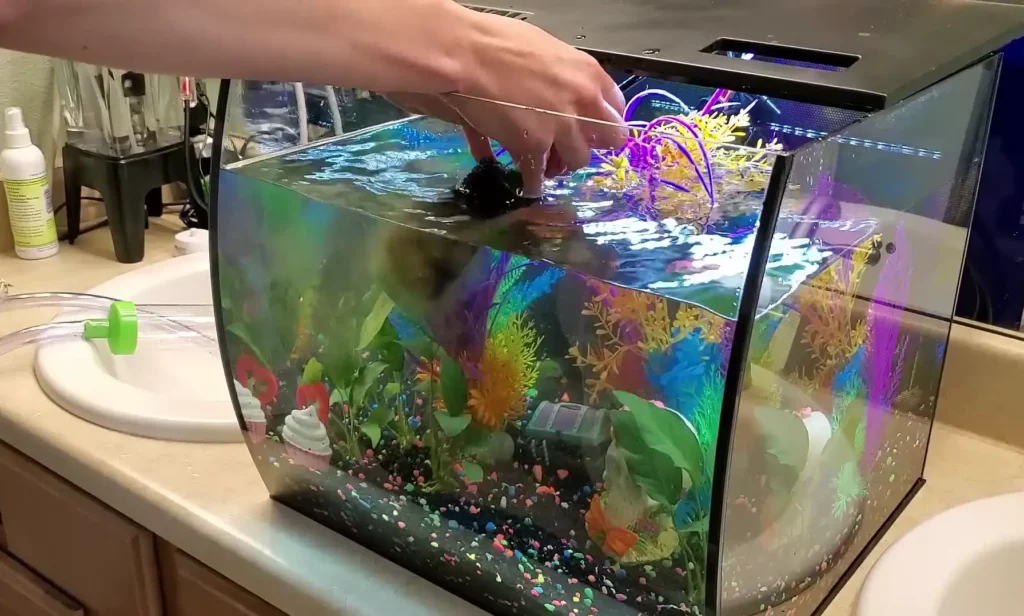
Even a fully cycled, healthy tank is not maintenance-free. Small, regular water changes, generally in the range of 10 to 20 percent weekly, are considered non-negotiable for keeping nitrate levels and general water quality stable over time. Treating the filter as if it removes every need for water changes is a mistake that tends to surface slowly, showing up as gradually declining fish health rather than a sudden crisis.
Equipment That Actually Prevents Problems Later
Sizing the Filter and Heater to the Tank, Not the Budget
Undersized filters and heaters without reliable thermostats are a common source of preventable stress on fish, since a filter rated for a smaller tank than the one it is running in cannot keep pace with waste production. Choosing equipment rated for the tank’s actual size, or slightly larger, closes a gap that becomes a much bigger problem once fish are already living in the water.
Test Kits Matter More Than Decorations
Ammonia and nitrite are invisible without proper testing, which means a tank can look completely fine while quietly becoming dangerous. A reliable liquid test kit is a more important early purchase than ornaments or lighting, since it is the only way to actually know what is happening chemically rather than guessing from how the water looks.
What Changed for Our Second Tank
The tetras we added after properly cycling the tank are still alive well over a year later, with no repeat of the gasping or discoloration that ended the first group within a week. Nothing about our second attempt involved more expensive equipment or rarer fish. It involved waiting five weeks before adding a single fish, testing water instead of trusting appearances, and treating the nitrogen cycle as the actual foundation of the hobby rather than an optional step that could be skipped in favor of getting to the fun part sooner.